First power
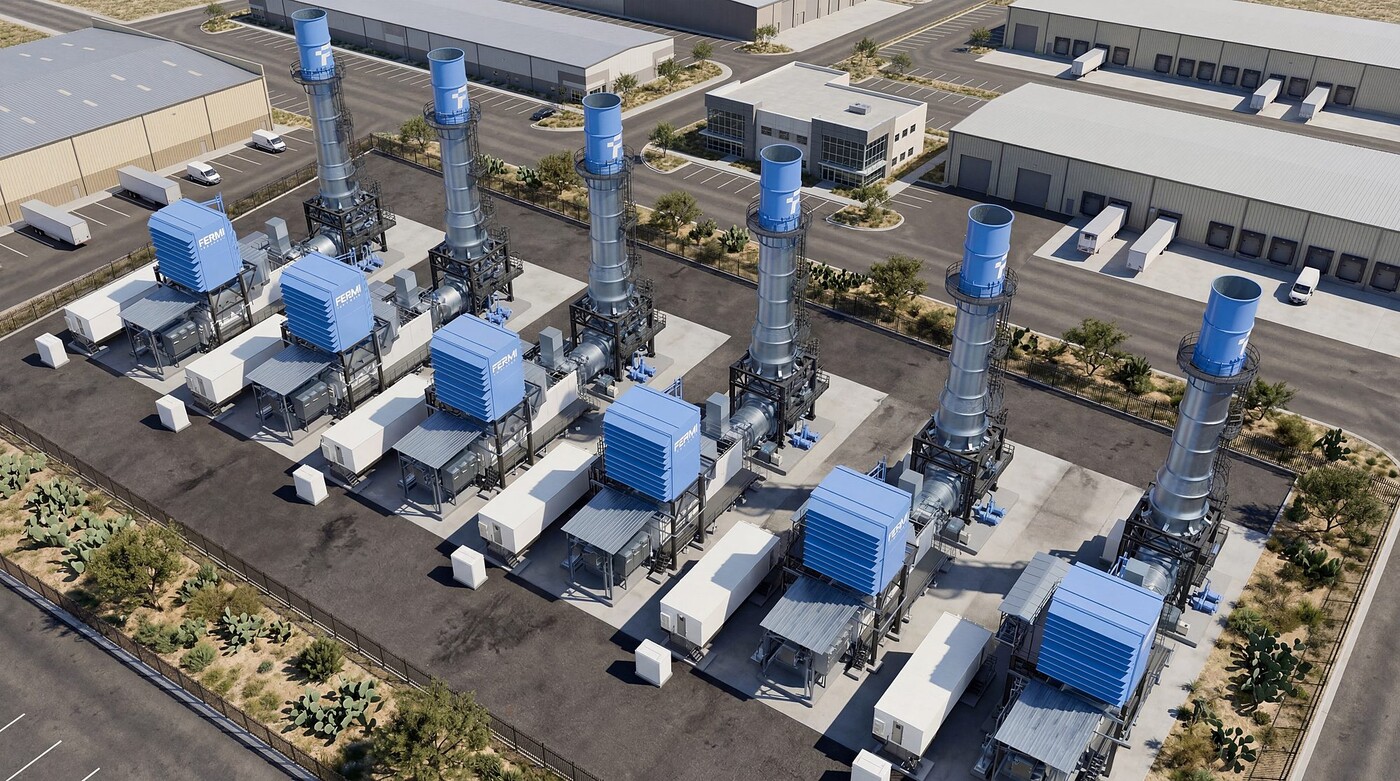
Initial gas blocks energize. Anchor positions for pilot clusters and time-critical training capacity. The scarce wave, finite by physics, not marketing.
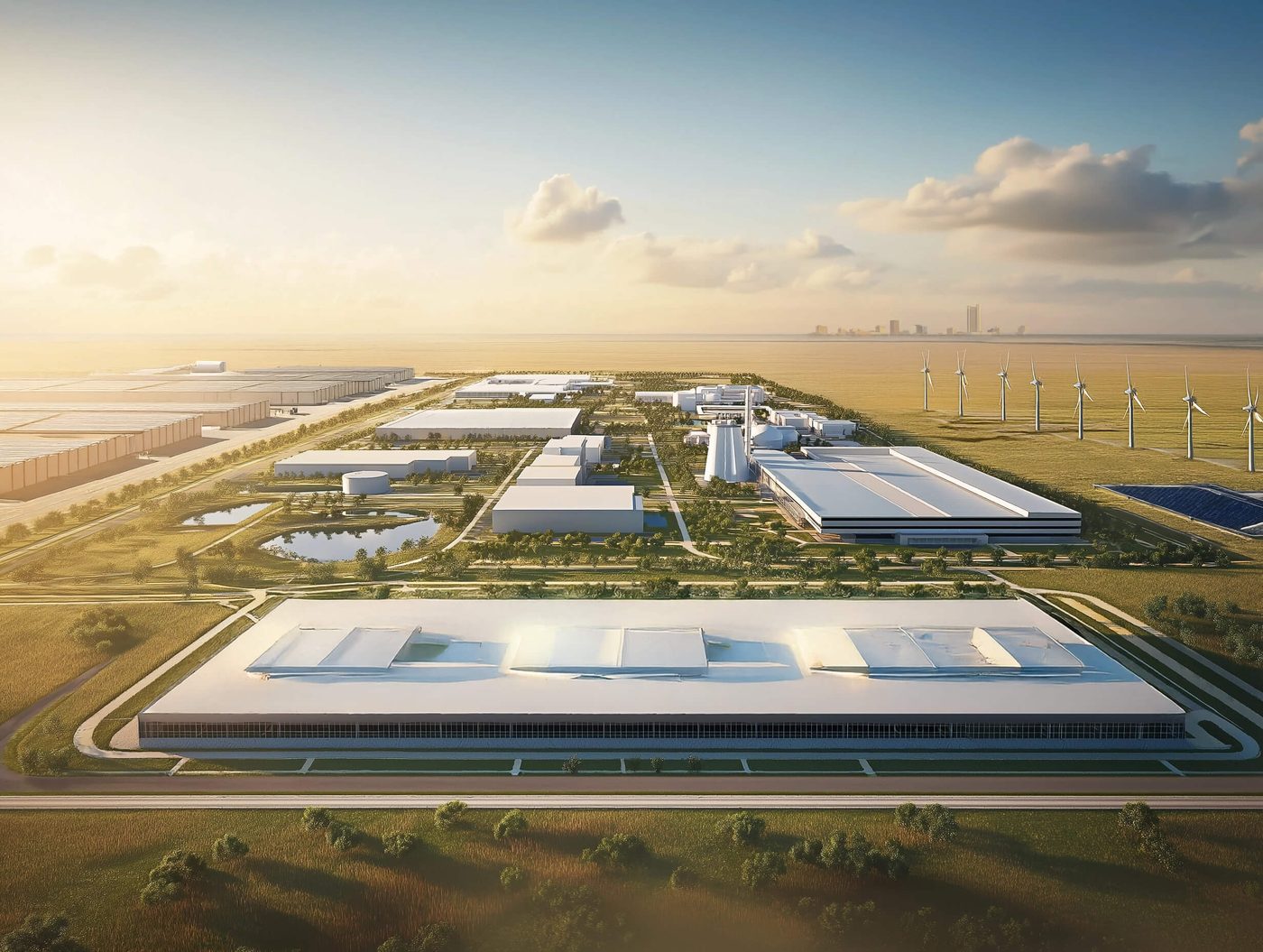
Concept renderBuying GPUs takes a quarter; powering them takes years. Fermi delivers the scarce half, energized, behind-the-meter gigawatts on a construction schedule, not a utility waiting list.
The chips ship in a year. The power is the long pole. Here is the honest distance to an energized gigawatt, and why Fermi is measured in quarters, not presidential terms.
First power Q1 2027. While a fresh queue request is still drawing up paperwork, your first blocks are already energizing, up to five years sooner.
7,570 acres in Carson County, Texas, a 4,617-acre main campus beside the DOE's Pantex plant, with workforce housing, incoming water and gas across FM 683, two data-center parcels, an on-site response center, and a Fiberlight dark-fiber node at the rail corridor.
Initial gas blocks energize. Anchor positions for pilot clusters and time-critical training capacity. The scarce wave, finite by physics, not marketing.
Equipment facility pulling turbine deliveries forward. Battery storage online for step-load smoothing and checkpoint-safe ride-through.
The complete permitted CCGT complex plus utility-scale solar. Campus operating at the scale of a major city; majority of shells delivered.
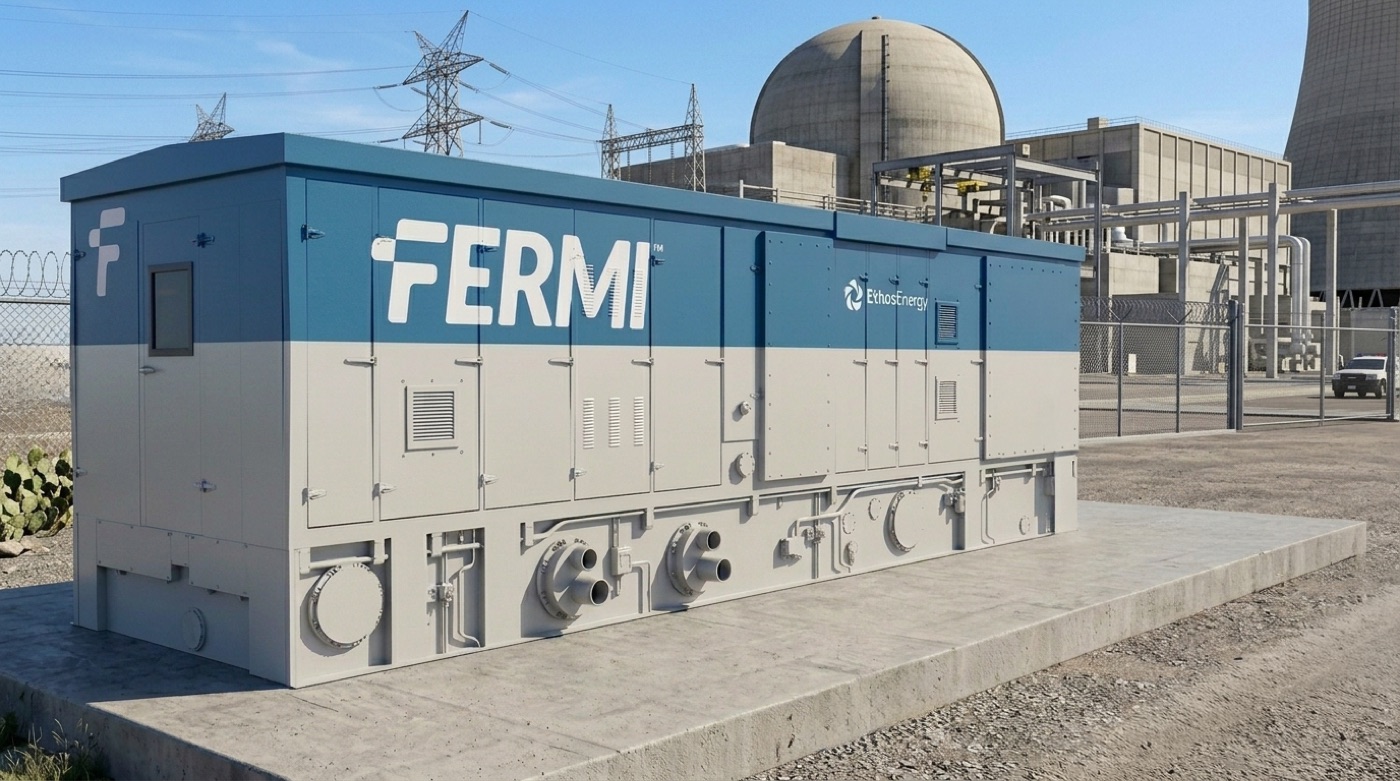
As AP1000s energize, contracted blocks are designed to migrate onto low-carbon baseload, with CFE reporting targeted to become hourly-matched without leaving the fence.
A 1.5 GW block needed by 2027 fits Wave 1, energizing 2027. A fresh interconnection request filed today reaches commercial operation around 2032, Fermi hands you 54 months of compute head start.
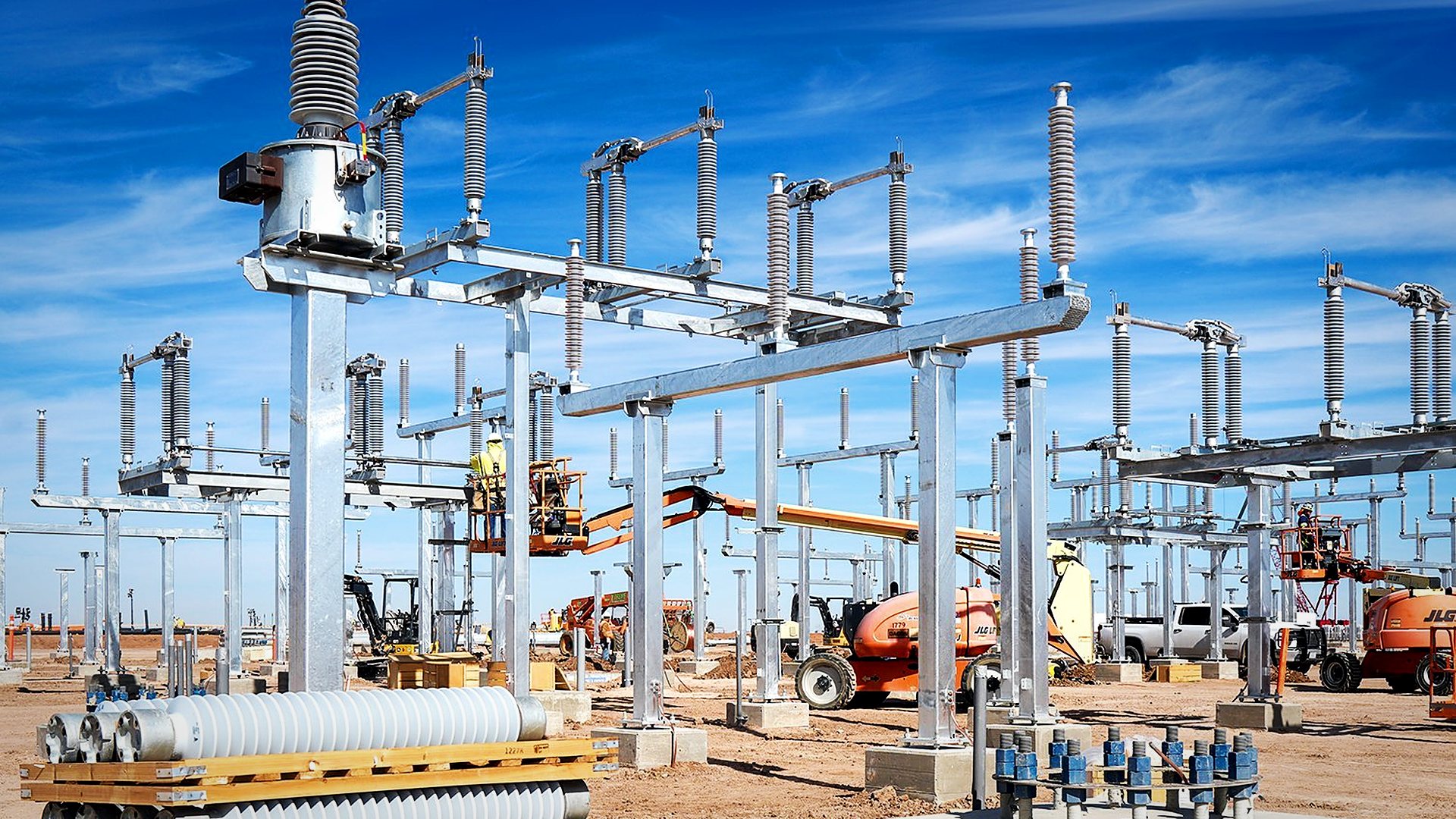
Generation, switchyard, fiber, and shell are designed as one program on one private 345 kV bus, behind the meter and independent of the public grid for the load. Designed to avoid the interconnection queue and to reduce transmission and curtailment risk. Capacity is planned to arrive on a construction schedule, not a regulator's calendar.

Contract gigawatts in waves tied to construction. Bring your own power profile or take the integrated build. Talk to our team to scope capacity, timing, and technical fit.

Same physics, three contracts. Only one puts the generation inside your fence.
A PPA is a financial instrument; it does not change the physics at your bus. You still inherit transmission constraints, curtailment risk, and the host grid’s worst day. Behind-the-meter generation puts the failure domains inside your contract: four independent source classes, a private switchyard, and a grid tie relegated to N+1 insurance. Your SLA rests on assets you can walk to.
Synchronized training jobs create load steps and oscillations that public grids hate. The campus pairs rotating mass, CCGT and nuclear turbogenerators provide real inertia, with sub-second BESS response for step events and checkpoint-safe ride-through. Because generation and load share one bus, frequency events are managed locally rather than exported to or imported from a public grid.
Contracted municipal water, 2.5 MGD initially with a path to 5.5, under a twenty-year agreement, paired with closed-loop, liquid-cooling-first designs that decouple compute growth from linear water growth. The AP1000 units are specified under fifty acre-feet per year. The constraint is real and engineered for.
Honestly, not on day one, and no site offering firm gigawatts that early can. What Fermi offers is a credible glide path: solar displacing midday gas immediately, then 4.4 GW of on-site nuclear from the early 2030s enabling hourly-matched CFE without REC gymnastics. Contract structures migrate your blocks onto nuclear as units energize.
Yes, Fermi is BYOP-ready, or can deliver an integrated build (generation, switchyard, fiber, and shell) as a single program. Reach out to scope technical fit.

Tell us your capacity and timeline. We confirm reservations in waves against construction.