
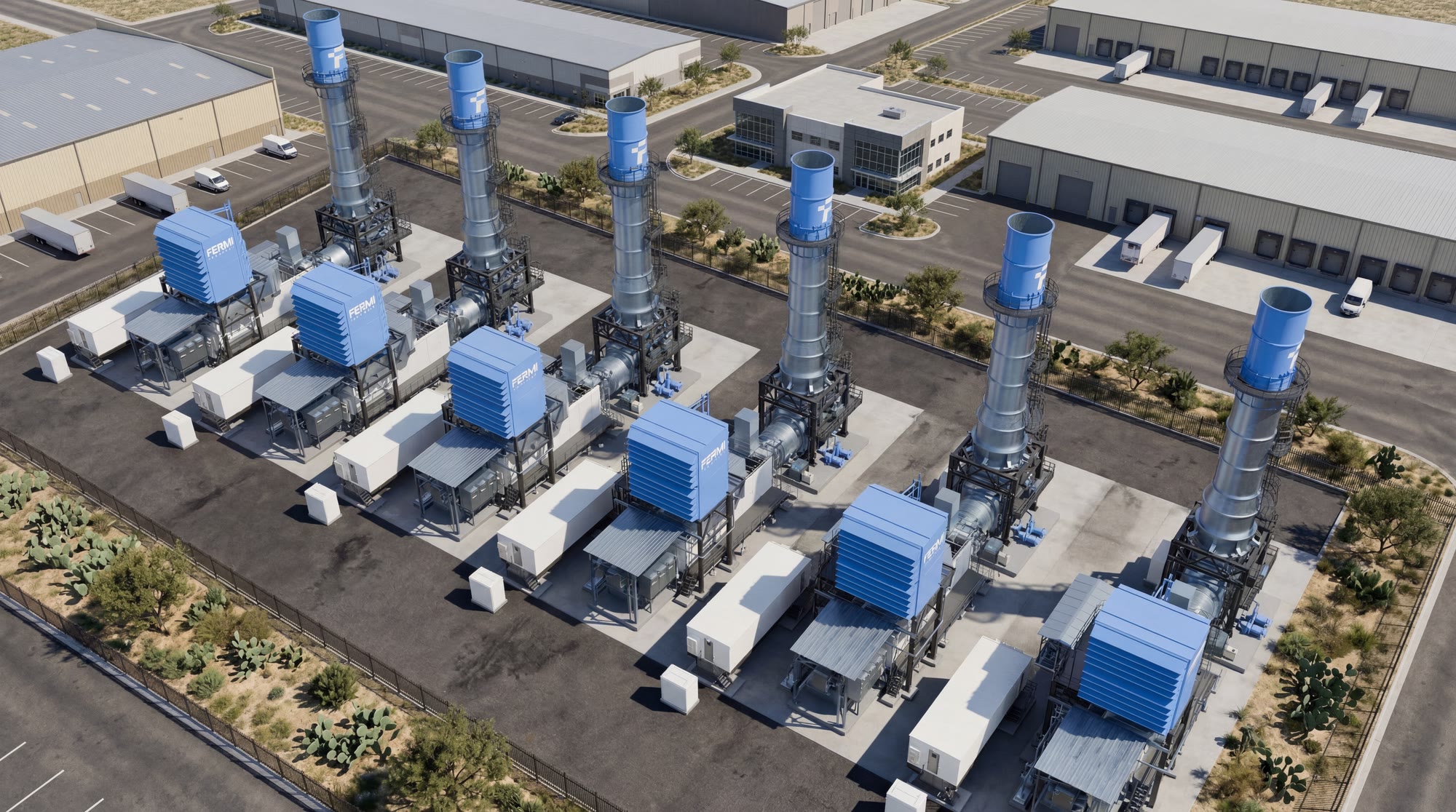
Natural-gas turbines
Siemens Energy frames supply the first on-site power, fed by pipeline at the site.
Project Matador occupies one contiguous site in Carson County, Texas, with gas, water, fiber and a 99-year ground lease already in hand. ~6 GW of natural gas is permitted; everything larger is planned.
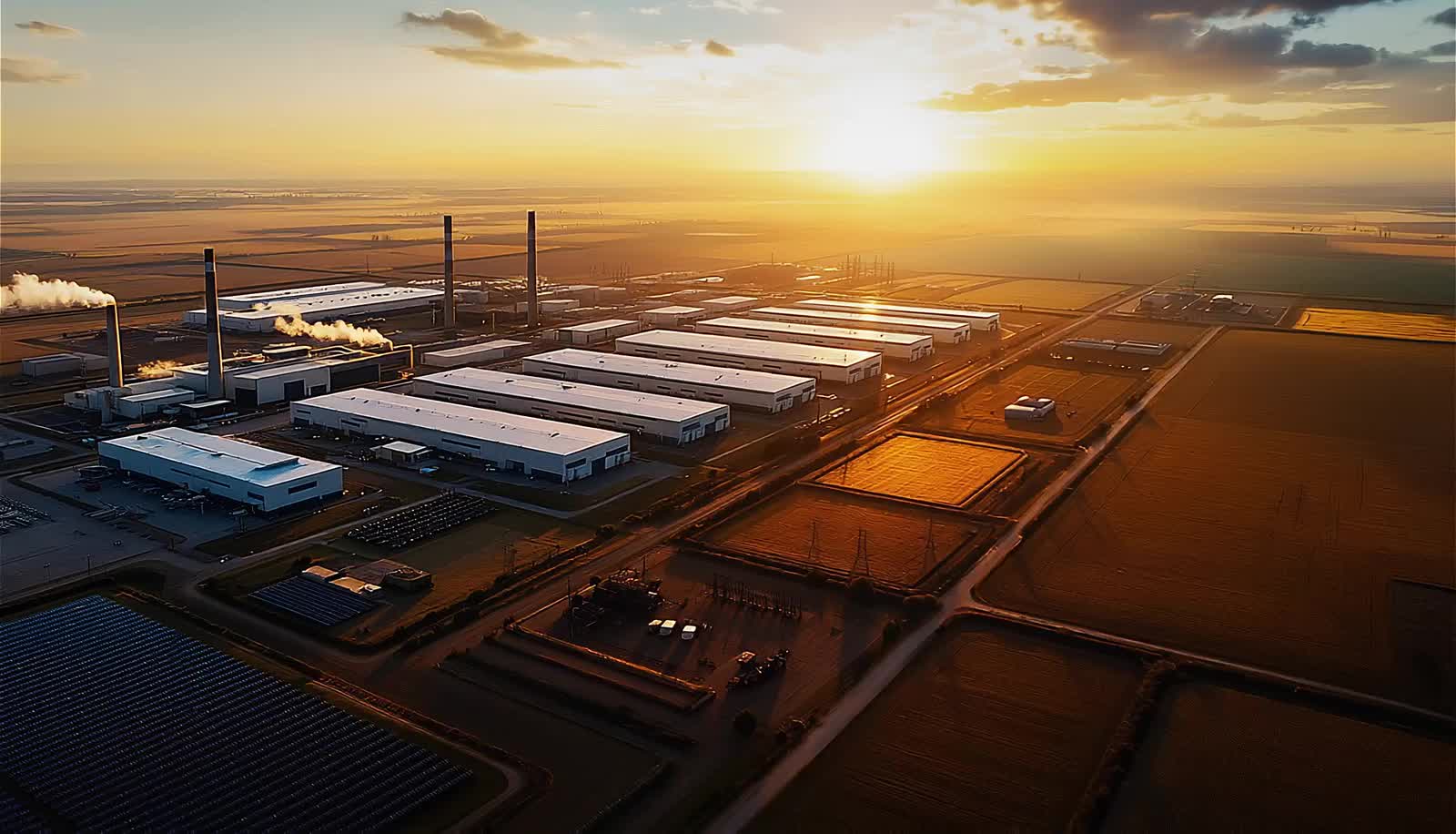
Project Matador at full build, concept film
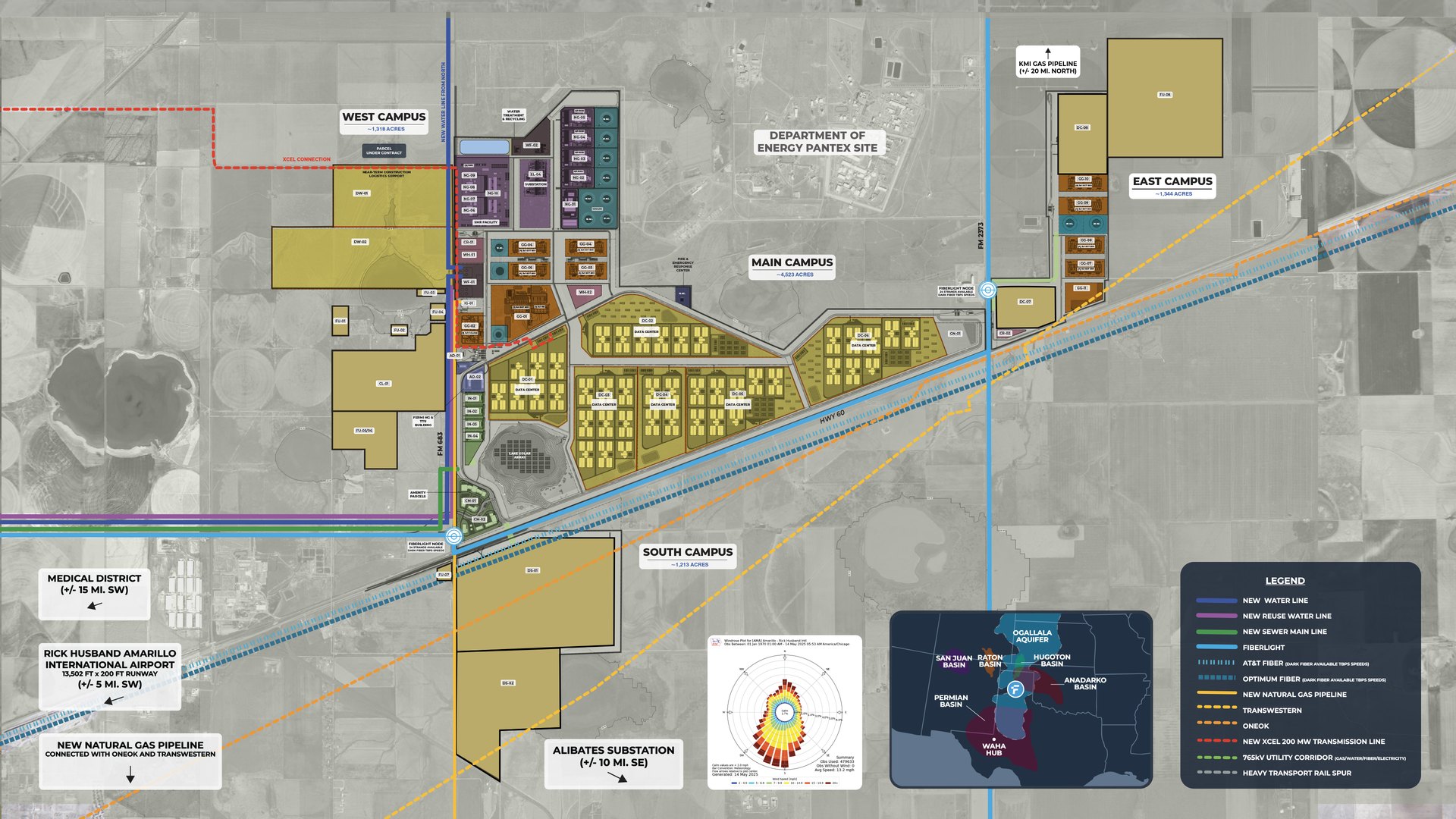
The company’s published master plan for Project Matador: the Main, West, East and South campuses, the generation sites, and the water, gas, fiber, transmission and rail corridors that serve them, beside the Department of Energy’s Pantex Plant.
Every source feeds the data centers directly, behind the meter. A connection of up to 200 MW to Southwestern Public Service, an Xcel Energy subsidiary, is for start-up and backup only.
Siemens Energy frames supply the first on-site power, fed by pipeline at the site.
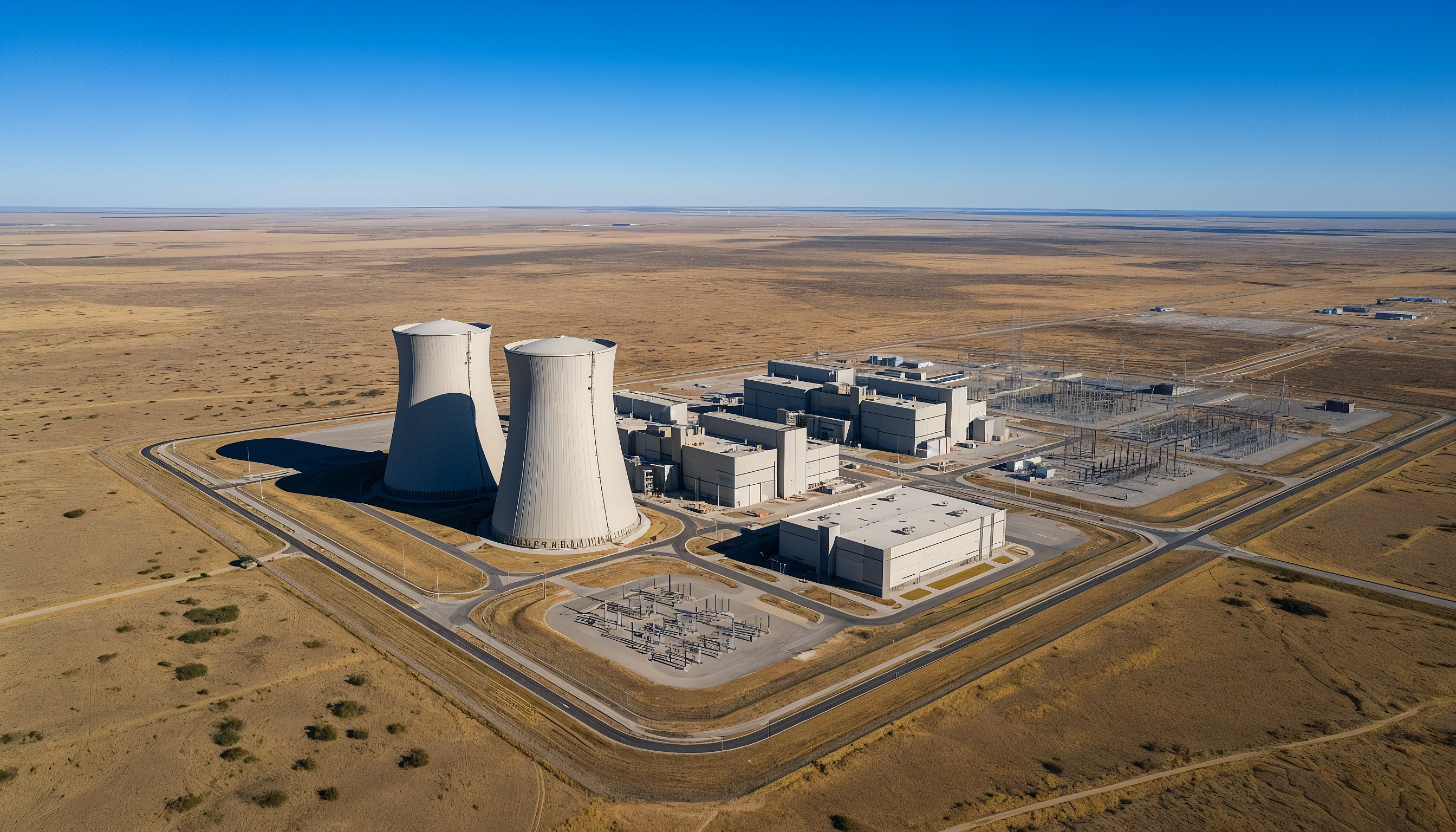
Four Westinghouse units, docketed at the NRC. No license has been issued.
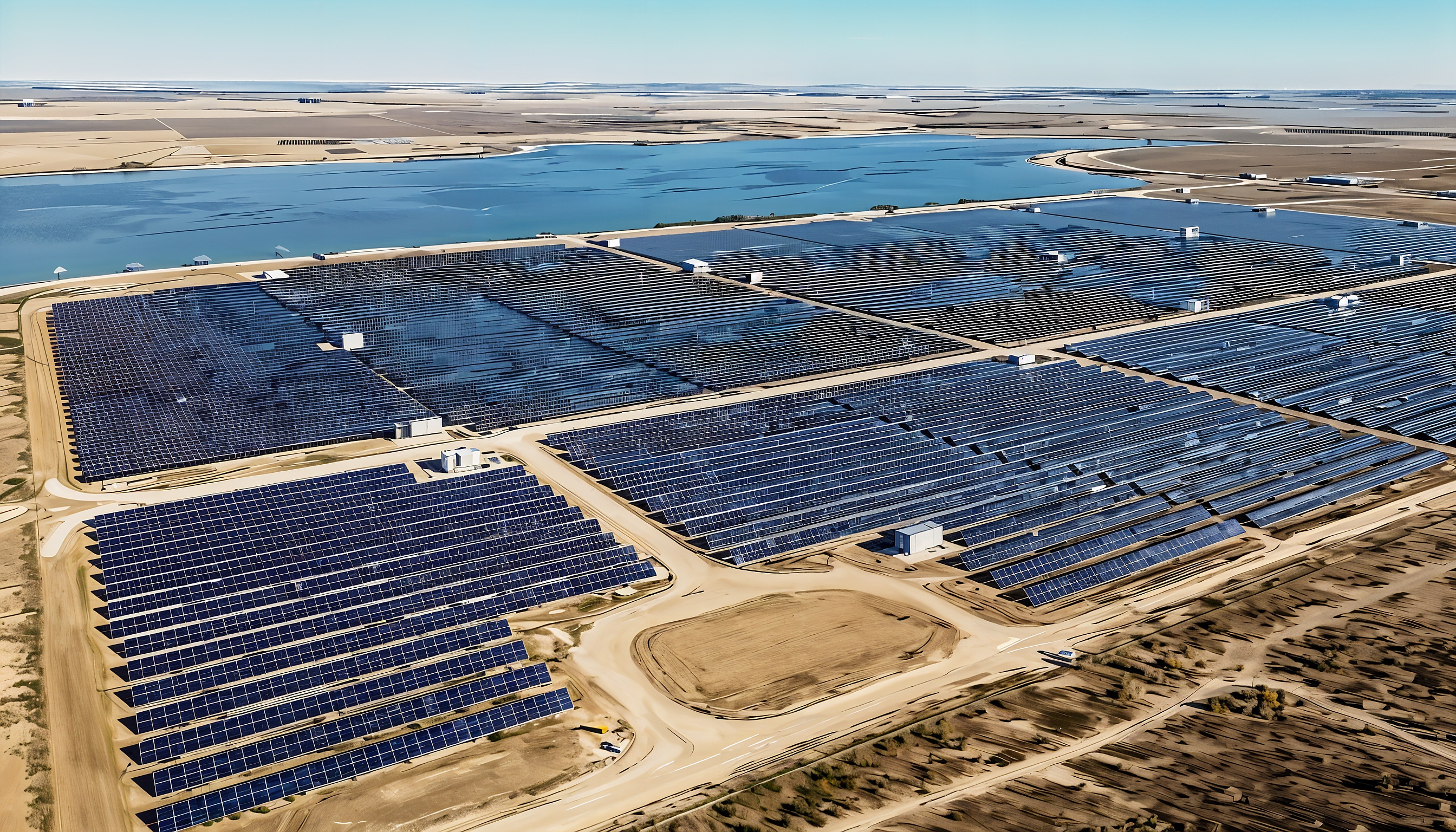
Planned to supplement gas in daylight hours. Not permitted or under construction.
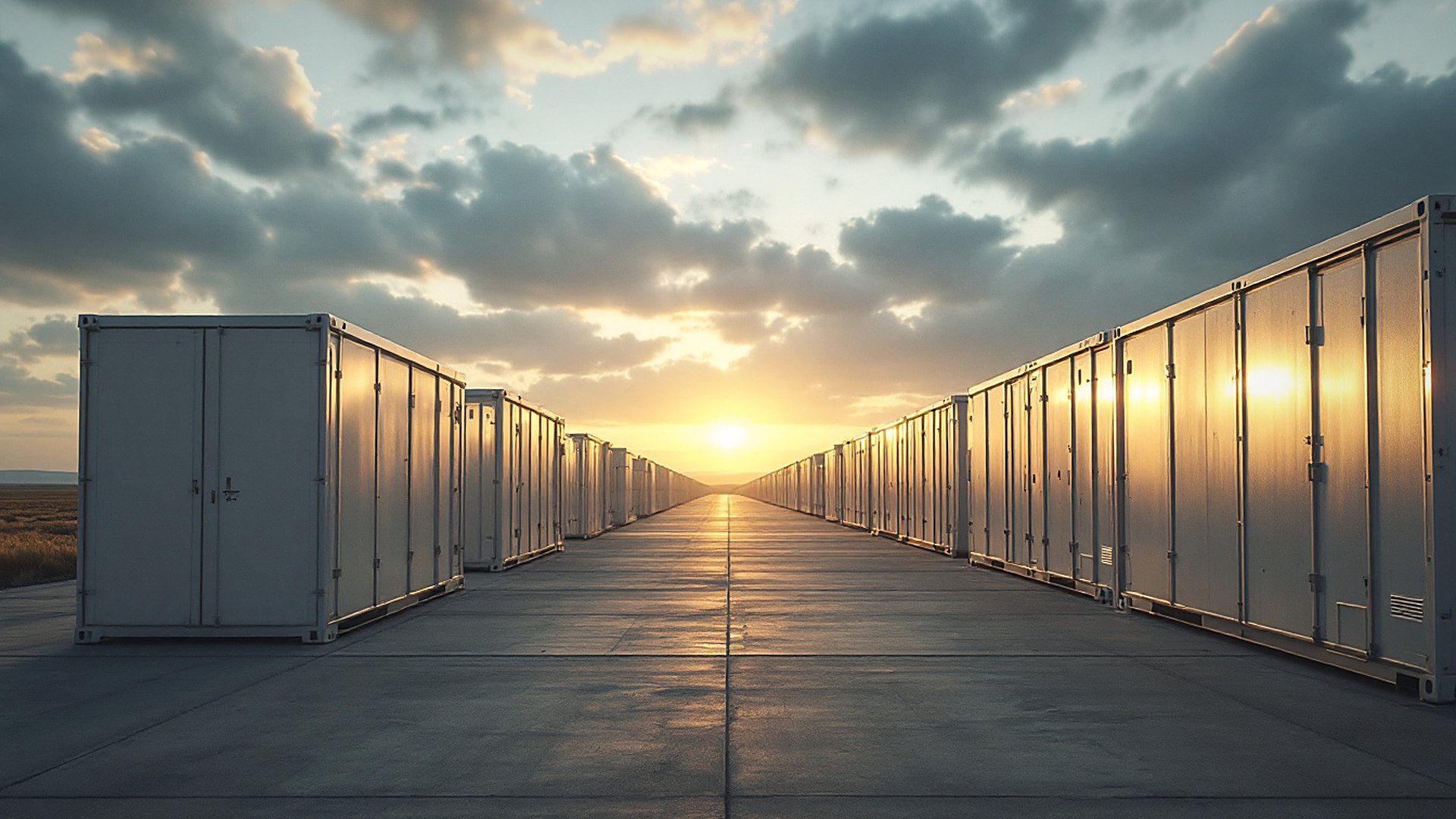
Planned for rapid changes in data-center load. Not permitted or under construction.
Two Siemens Energy frames and a GE Frame 6B, staged across the delivery phases.
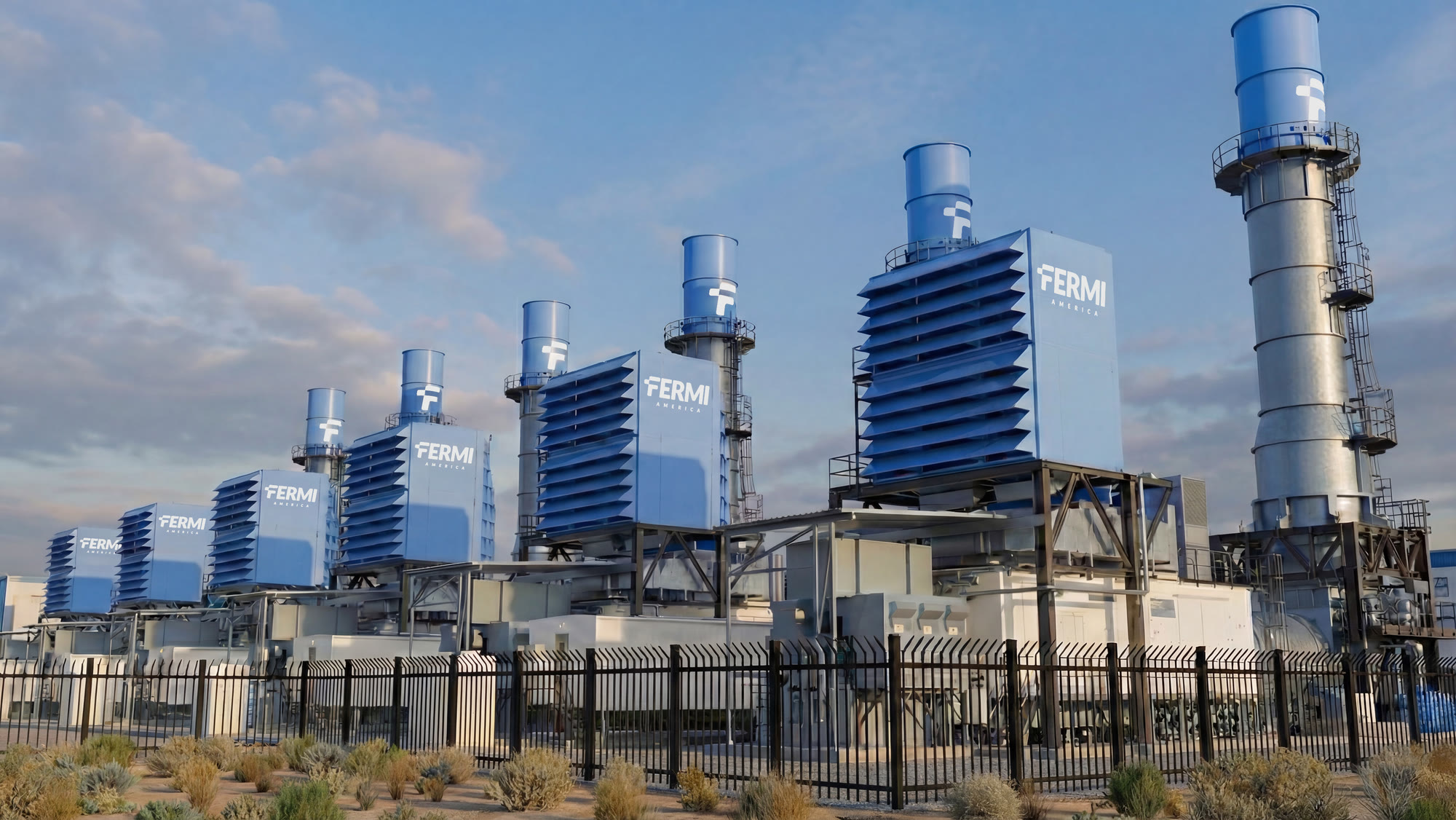
Six units arrived at the Port of Houston in February 2026 for the first phase of generation. Six further units are financed for delivery in 2028 under the CSG Investments facility.
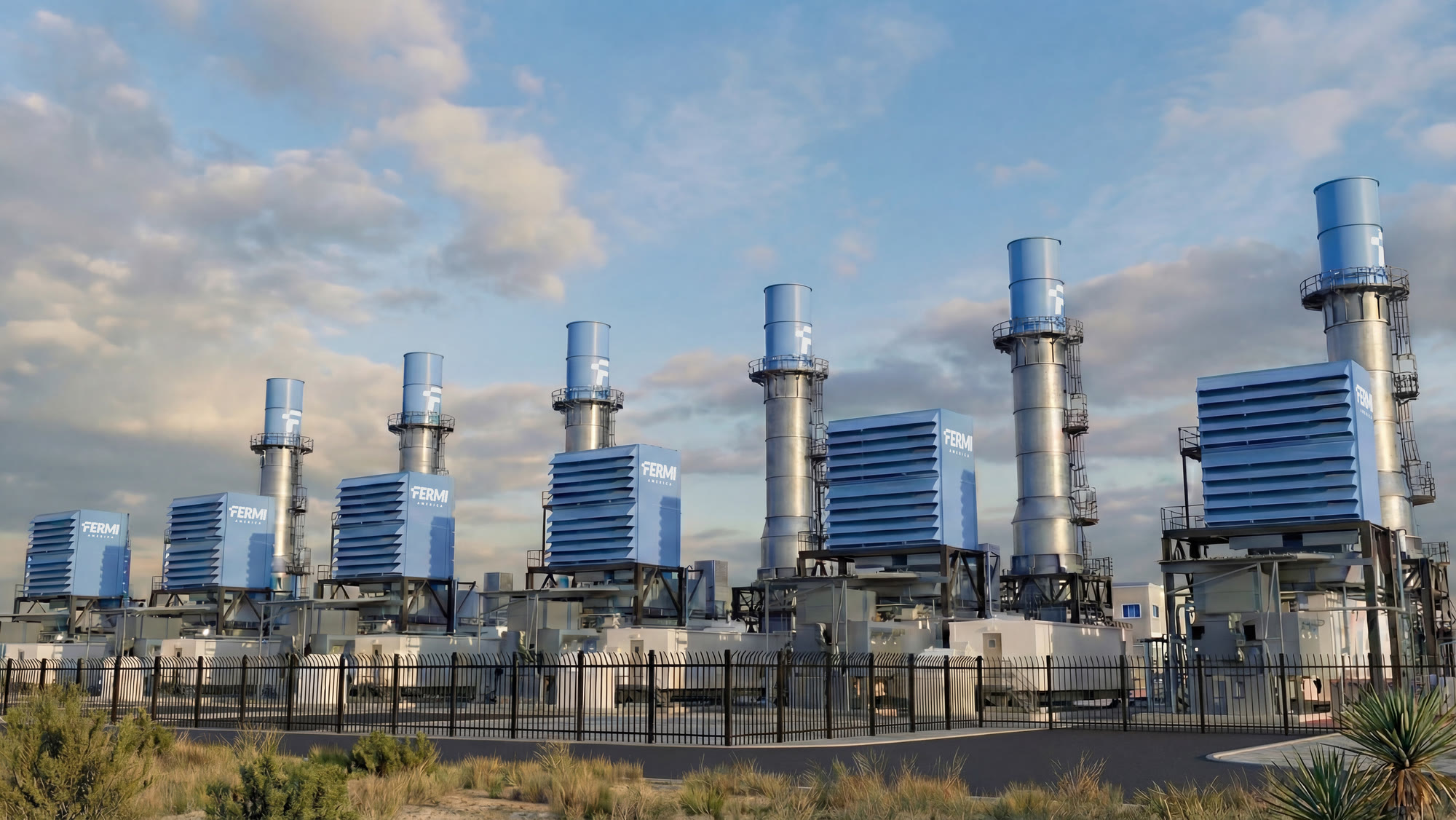
Three F-class units arrived at the Port of Houston in July 2026 for the second phase of generation. One is now on the campus and two are in transit. TSK is engaged for early works and fast-start engineering.
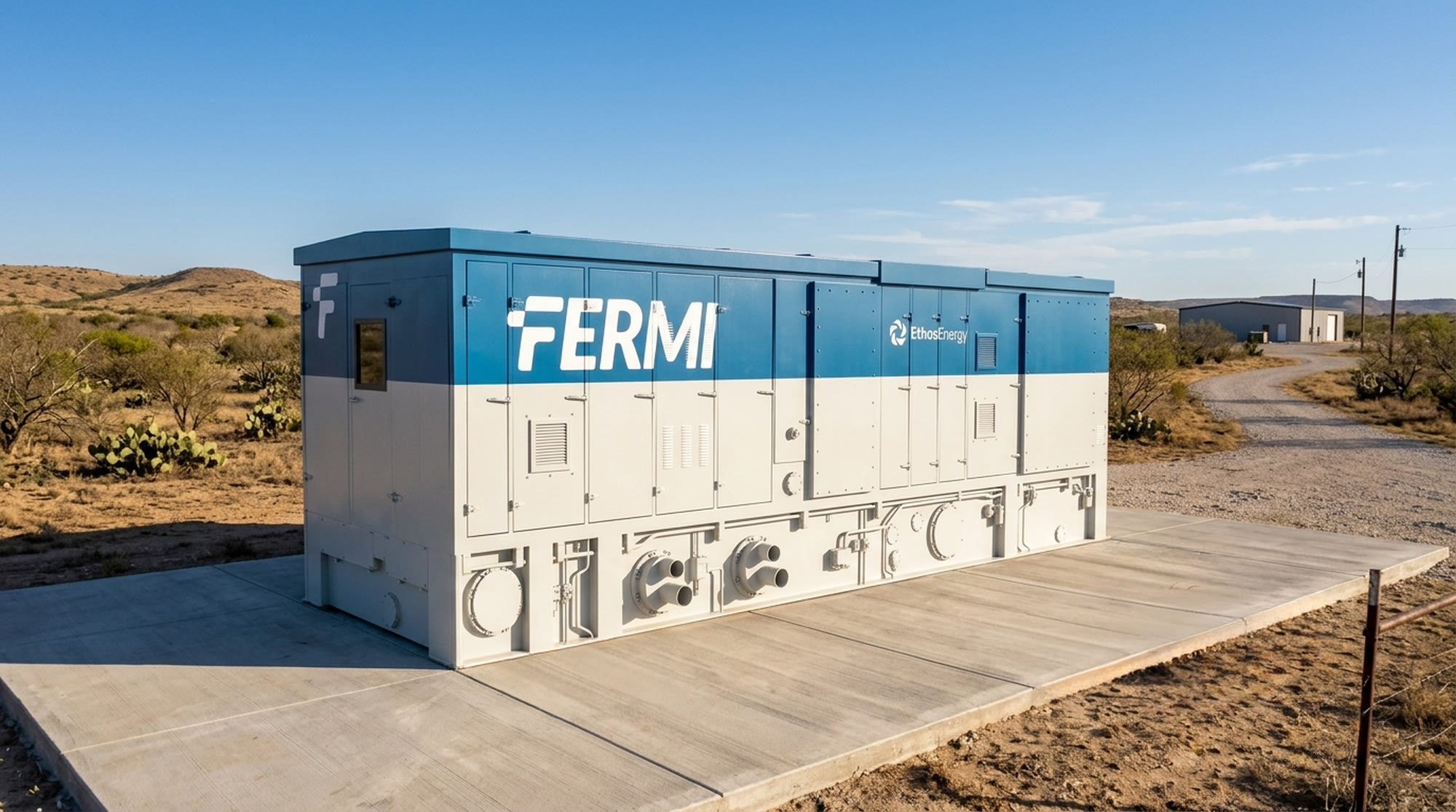
Three units are on the campus in Carson County, per the fiscal 2025 Form 10-K.