Fermi’s business.
Fermi leases powered data-center capacity. One lease is binding. The company is pre-revenue until that facility is delivered.
What Fermi owns and what it leases.
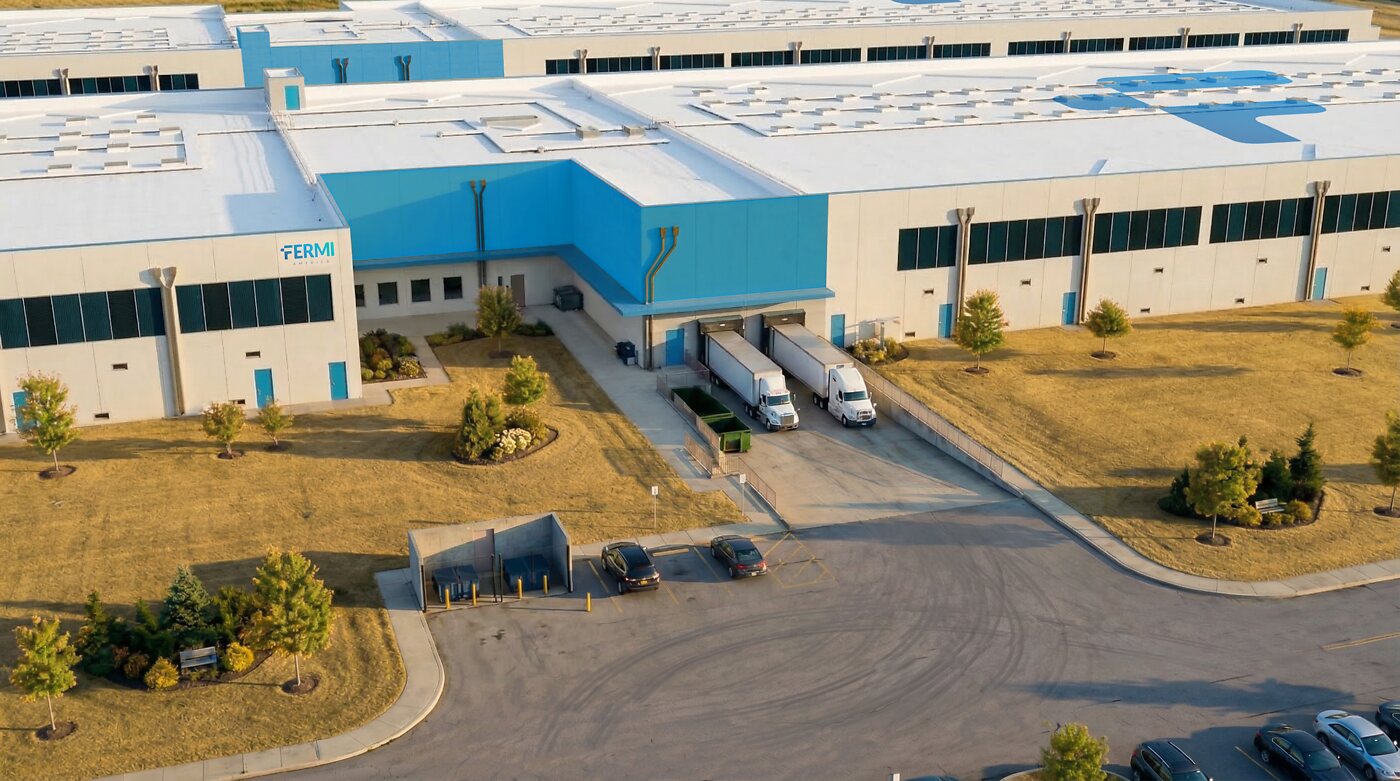
Fermi leases land, buys turbines, builds shells and signs leases. It sells neither electricity nor compute, and revenue begins when a facility is delivered.
- What a tenant pays forA building, and the generation that runs it, under one lease with one landlord. The TensorWave lease implies ~$1.95 million per megawatt-year, undiscounted: ~$6.5 billion divided by 222 MW and by the 15-year initial term.
- What Fermi carriesLand, permits, turbines, switchyard and shell, funded ahead of revenue. Property, plant and equipment, net, stood at $1,547.9 million at June 30, 2026.
Regulatory status.
The TCEQ made one clean-air permit final in February 2026, covering ~6 GW of natural gas, and is reviewing a second application for ~5 GW filed in March 2026. The NRC docketed a Combined License Application for four Westinghouse AP1000 units in September 2025 and schedules a Final Environmental Impact Statement for December 2026; docketing is acceptance for review, not a license, and no unit may be built or operated until the NRC issues one.
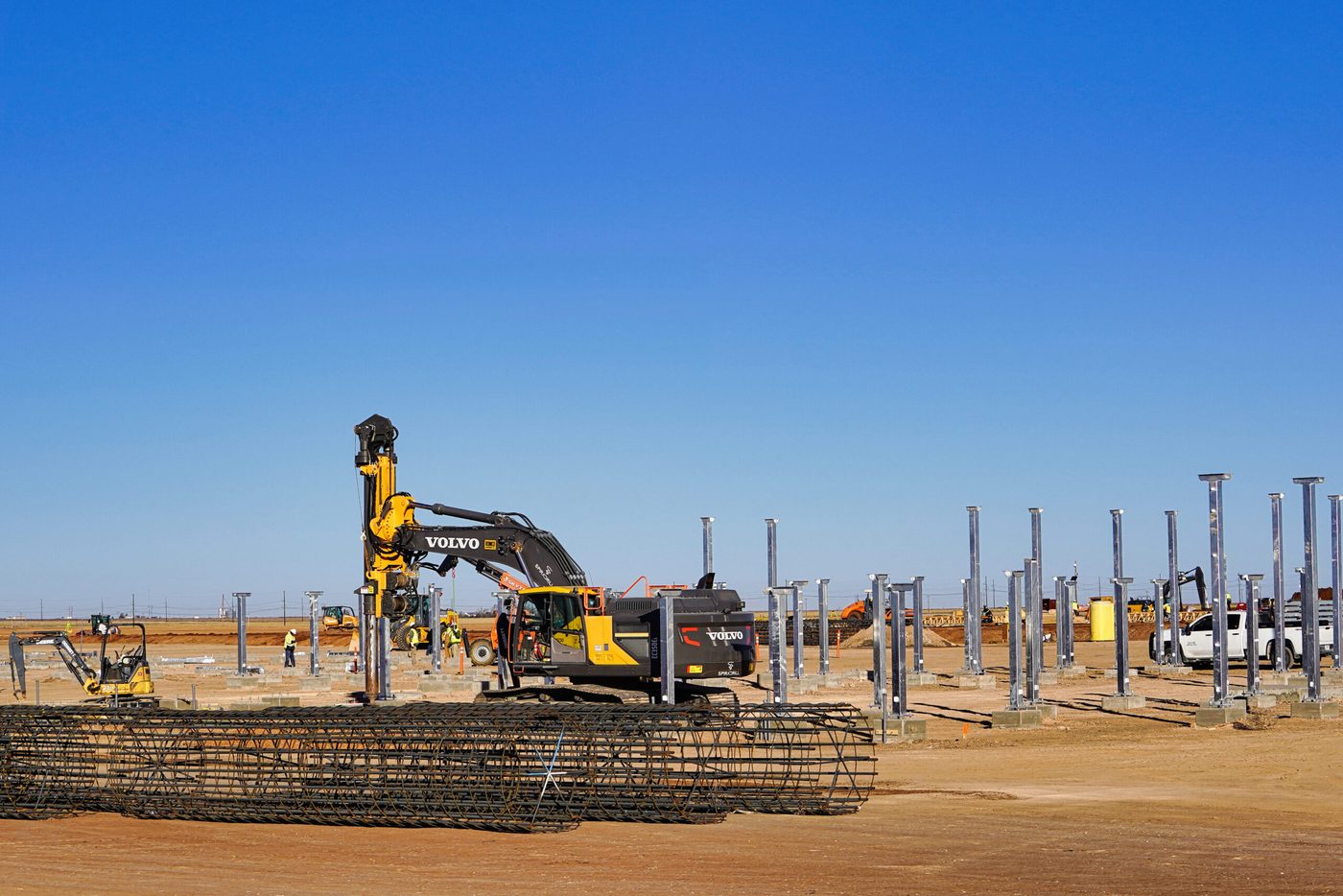
Work completed on site.
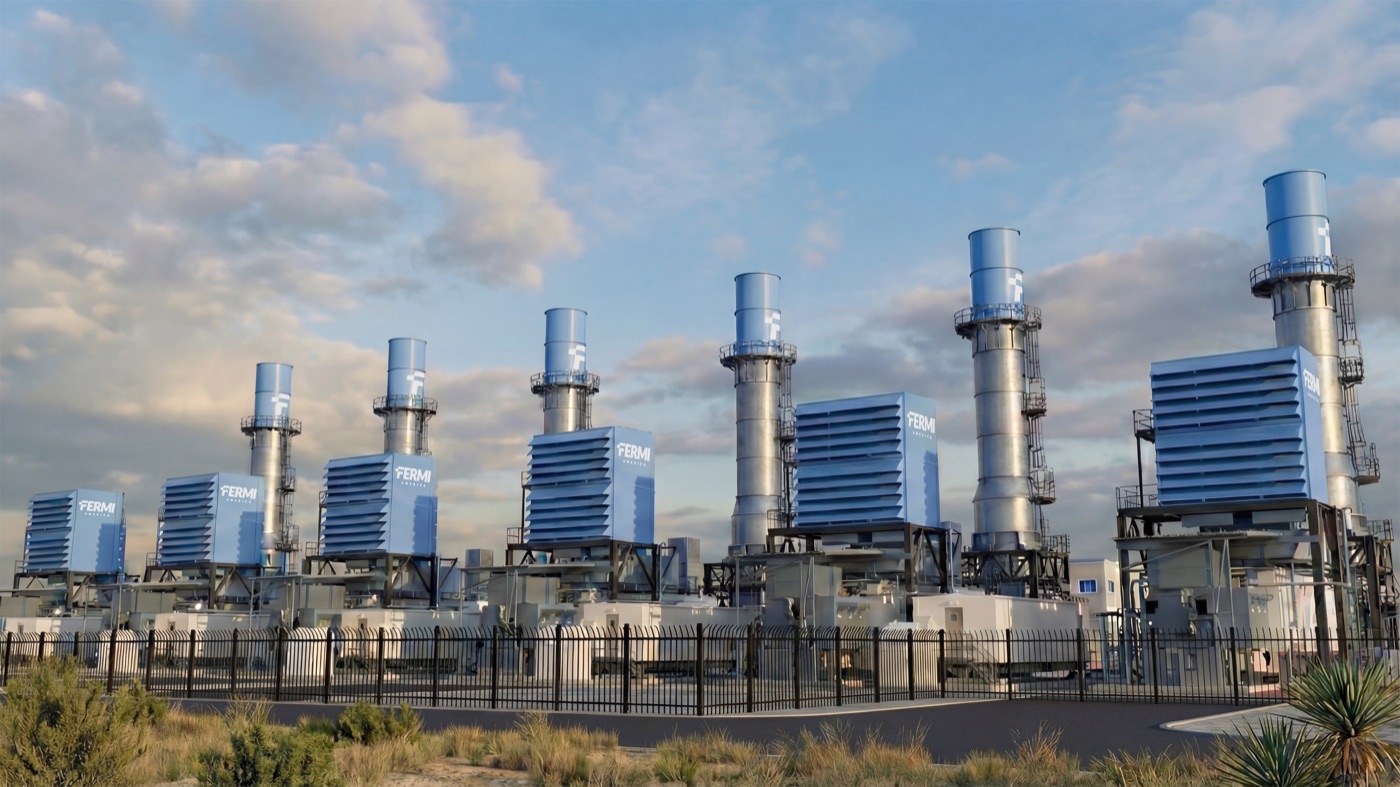
Reported for the second quarter of 2026. Nothing generates yet.
- 11.3 milesPerimeter fencing installed.
- 7.2 milesWater line installed.
- 4.6 milesHigh-pressure gas line installed.
- ~261 acresSite preparation completed within the campus, ~11.4 million square feet.
Schedule guidance.
Management guidance from August 2026, forward-looking and not assured.
- ~200 MW, within six monthsInitial commercial power, from the grid.
- ~210 MW, July 1, 2027First on-site generation to the anchor tenant, with ~640 MW nameplate by the fourth quarter of 2027.
- ~1.5 GW, 18 to 24 monthsOn-site generation.
- ~4.8 GW, ~30 monthsOn-site generation, if the Hillcore power center reaches definitive agreements and is built.
Generation capacity over time.
How the build is financed.
Non-recourse equipment facilities finance the turbines and high-voltage gear. The October 2025 offering and the July 2026 convertible notes fund the balance. Cash and restricted cash stood at $91.7 million on June 30, 2026, before ~$416.8 million of net note proceeds. Management identified conditions raising substantial doubt about the ability to continue as a going concern and concluded that its plans alleviate that doubt; the Form 10-Q sets out the analysis.
Investor Relations.
Filings, results and governance documents are on the Investor Relations pages. Inquiries reach IR@fermiamerica.com.